
Integrity in consulting is often described as a value, written on websites, mentioned in proposals, and assumed once trust is established.
But in consulting, integrity shows up much earlier than that.
Often, before a conversation even begins.
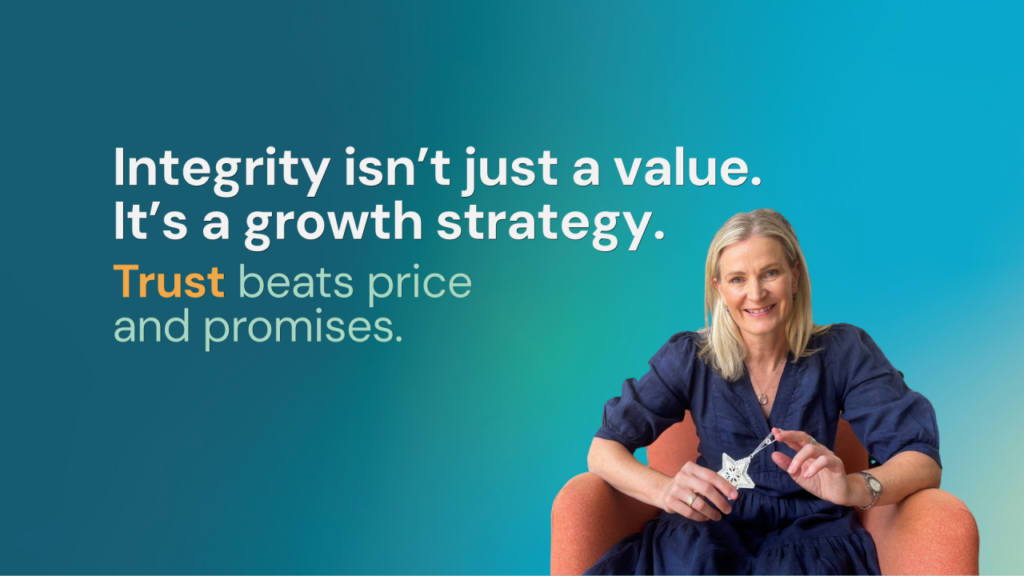
What integrity in consulting really looks like
Integrity in consulting is not about saying the right thing.
It is about how consistently your behaviour aligns with what you claim.
Clients notice:
- How clearly you define what you do and don’t do
- Whether your thinking stays grounded when pressure appears
- How you handle uncertainty, trade-offs, and limits
These signals matter more than any stated value.
They shape trust before credentials do.
Why integrity in consulting is tested in small moments
Most integrity decisions are not dramatic.
Most of these moments are quiet.
They appear when:
- A scope could be stretched but shouldn’t be
- An answer is uncertain but confidence is expected
- A recommendation is popular but not right
These are the moments clients remember.
Not because they are visible, but because they are felt.
How integrity influences commercial outcomes
Strong integrity in consulting does not slow growth.
It focuses it.
Clients who trust your judgement:
- Engage earlier
- Push less on fees
- Stay longer when conditions change
Trust reduces friction.
And reduced friction compounds over time.
Where integrity is often misunderstood
Many leaders believe integrity speaks for itself.
In practice, it needs structure.
Without clarity:
- Boundaries blur
- Expectations drift
- Decisions feel inconsistent
Integrity works best when it is supported by language.
Language that explains:
- What you stand for
- What you won’t compromise
- Where you draw the line
Making integrity visible without performing it
The challenge is not having integrity.
The challenge is making it legible to others.
This does not require storytelling or self-promotion.
It requires:
- Clear positioning
- Consistent reasoning
- Decisions that align with stated principles
When integrity is visible in this way, it becomes credible.
Not performative.
Not defensive.
Just dependable.
A final thought
If trust takes longer than it should…
If decisions feel heavier than expected…
If alignment keeps slipping late in the process…
It may not be a capability gap.
It may be that integrity hasn’t been made clear early enough.